kitab tawheed pdf
Kitab Tawheed PDF: A Comprehensive Guide (Updated 12/10/2025)
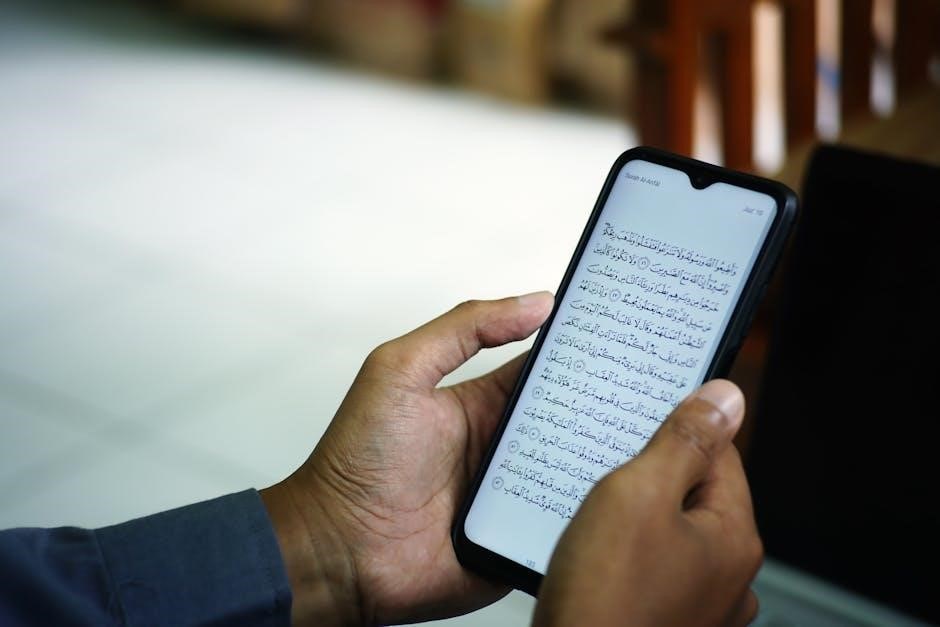
Kitab Tawheed, a foundational text in Islamic monotheism, is readily available as a PDF download from various online sources, including archive.org.
Readers can access the complete translation into Russian, enabling broader understanding of Sheikh Muhammad ibn Abdul Wahhab’s teachings on Tawheed.
Trendyol UAE supports Arabic languages and AED pricing, offering convenient access to Islamic resources alongside diverse retail options, as of March 28, 2025.
Kitab Tawheed, meaning “The Book of the Oneness of God,” stands as a cornerstone of Islamic theology, meticulously compiled by the esteemed scholar Muhammad ibn Abd al-Wahhab. This seminal work serves as a profound exploration of Tawheed, the absolute and uncompromising belief in the singularity and uniqueness of Allah.
The book isn’t merely a theoretical discourse; it’s a practical guide designed to purify one’s faith and rectify any deviations from pure monotheism. Its significance lies in its direct confrontation of Shirk – associating partners with God – which is considered the gravest sin in Islam.
Today, readily accessible as a PDF, Kitab Tawheed transcends geographical boundaries, allowing Muslims worldwide to engage with its teachings. Translations, including a complete version in Russian, further broaden its reach, making its vital message available to a diverse audience. The availability of the PDF format facilitates easy study and dissemination of this crucial text, ensuring its enduring legacy in promoting the correct understanding of Tawheed.
The Importance of Tawheed in Islam
Tawheed, the absolute oneness of God, is the very foundation of Islam, the central tenet upon which the entire faith rests. It dictates that all worship, devotion, and obedience are due solely to Allah, without any partners or intermediaries. Without a firm grasp of Tawheed, all other acts of worship are rendered null and void.
Kitab Tawheed, available as a PDF, meticulously elucidates this crucial concept, exposing the subtle and overt forms of Shirk (associating partners with God) that can infiltrate a believer’s heart. The book emphasizes that upholding Tawheed is not merely a matter of intellectual assent, but a complete submission of the will to Allah.
Accessing Kitab Tawheed in PDF format, even with translations like the Russian version, allows for widespread education on this vital principle. It serves as a powerful antidote to polytheistic beliefs and practices, guiding Muslims towards a pure and unadulterated worship of the One True God, ensuring spiritual salvation and divine acceptance.
Muhammad ibn Abd al-Wahhab (d. 1792) was a renowned Islamic scholar and reformer, celebrated for his staunch advocacy of pure Tawheed (monotheism). He dedicated his life to purging Islamic practice of innovations and superstitions that had crept in over time, leading many astray from the true path.
His magnum opus, Kitab Tawheed, now widely accessible as a PDF, represents the culmination of his efforts. The book isn’t a biographical work, but a focused treatise on the essential doctrine of Islamic faith. It’s a direct and uncompromising call to return to the original, unadulterated teachings of the Quran and Sunnah.
The availability of Kitab Tawheed in PDF format, including translations like the Russian version, ensures his message reaches a global audience. His work continues to inspire Muslims worldwide to reaffirm their commitment to the absolute oneness of Allah, and to actively combat Shirk in all its forms, promoting a purer understanding of Islam.
Historical Context of Kitab Tawheed
Kitab Tawheed emerged during a period of significant religious and political upheaval in the Arabian Peninsula during the 18th century. Widespread polytheistic practices, saint veneration, and superstitious beliefs had become deeply entrenched in society, obscuring the core tenets of Islam.
Muhammad ibn Abd al-Wahhab observed these deviations with concern, recognizing the urgent need for reform. He sought to revive the original message of Islam, emphasizing the absolute oneness of God – a message powerfully articulated in his Kitab Tawheed, now readily available as a PDF.
The book’s publication sparked both fervent support and fierce opposition. Its uncompromising stance against popular, yet un-Islamic, customs challenged the established order. Today, the PDF version facilitates wider access to this historical document, allowing scholars and students to study its context and impact, and understand its enduring relevance in combating religious innovation.

Understanding the Core Concepts
Kitab Tawheed’s PDF elucidates fundamental Islamic beliefs, focusing on Tawheed – the absolute oneness of God – and the grave sin of Shirk, readily accessible online.
Defining Tawheed: The Oneness of God
Kitab Tawheed’s PDF meticulously defines Tawheed, the cornerstone of Islam, as the absolute and uncompromising oneness of Allah. This foundational concept, central to the book, transcends mere acknowledgement of God’s existence; it encompasses the complete and utter dedication of worship to Him alone.
The text, available for download, clarifies that Tawheed manifests in three crucial aspects: Tawheed Ar-Rububiyyah (Lordship), affirming Allah’s sole creation, ownership, and governance of the universe; Tawheed Al-Uluhiyyah (Divinity), emphasizing that worship is due to Allah alone, rejecting all forms of idolatry; and Tawheed Al-Asma’ was-Sifat (Names and Attributes), acknowledging and affirming Allah’s perfect names and attributes as revealed in the Quran and Sunnah.
Through detailed explanations within the PDF, the book stresses that any association of partners with Allah in worship constitutes Shirk, the most grievous sin in Islam, negating the very essence of Tawheed and invalidating all righteous deeds. Understanding these nuances is paramount for a correct Islamic belief system.
Shirk: The Greatest Sin in Islam
Kitab Tawheed’s PDF dedicates significant attention to Shirk, unequivocally declaring it the most heinous sin in Islam. Shirk, the association of partners with Allah in worship, fundamentally contradicts the core principle of Tawheed – the absolute oneness of God.
The book meticulously details various forms of Shirk, extending beyond overt idolatry to include subtle manifestations like seeking intercession from deceased individuals or attributing powers to created beings. The PDF emphasizes that even minor acts of Shirk can invalidate one’s faith and lead to eternal punishment.
Kitab Tawheed warns against practices like venerating graves and shrines, considering them forms of Shirk as they imply attributing divine qualities to those buried within. The text stresses the importance of directing all forms of worship – prayer, supplication, sacrifice – solely to Allah, as outlined in the PDF’s comprehensive teachings on pure monotheism.
The Attributes of Allah as Presented in the Book
The Kitab Tawheed PDF profoundly elucidates Allah’s attributes, emphasizing their perfection and transcendence. The book doesn’t attempt to define Allah through human limitations but rather affirms His attributes as revealed in the Quran and Sunnah, accessible through the PDF format.
It highlights attributes like Al-Rahman (The Most Gracious) and Al-Rahim (The Most Merciful), demonstrating Allah’s boundless compassion. The PDF stresses that these attributes are not merely names but reflect Allah’s inherent qualities, eternally and perfectly possessed.
Kitab Tawheed also addresses attributes related to Allah’s power and knowledge, reinforcing the concept of His absolute sovereignty. The book cautions against distorting or denying these attributes, emphasizing the importance of accepting them as they are, as presented within the readily available PDF version for comprehensive study.
The Difference Between Tawheed Ar-Rububiyyah, Al-Uluhiyyah, and Al-Asma’ was-Sifat
The Kitab Tawheed PDF meticulously differentiates between three crucial aspects of Tawheed: Ar-Rububiyyah (Lordship), Al-Uluhiyyah (Worship), and Al-Asma’ was-Sifat (Names and Attributes). The PDF clarifies that Ar-Rububiyyah acknowledges Allah as the Creator and Sustainer, a belief even polytheists may hold.
However, true Tawheed necessitates Al-Uluhiyyah – directing all worship solely to Allah, rejecting any form of idolatry. This distinction is central to the book’s message, easily accessible through the PDF download.
Finally, the Kitab Tawheed PDF emphasizes Al-Asma’ was-Sifat, affirming Allah’s names and attributes without distortion or denial. Understanding these three facets, as detailed in the PDF, is vital for achieving genuine monotheism and avoiding the pitfalls of Shirk, ensuring a pure and correct understanding of Islam.

Availability and Accessing Kitab Tawheed
Kitab Tawheed PDF versions are widely accessible online, including archive.org, and translated into Russian for broader readership, facilitating study and understanding.
Kitab Tawheed PDF Download Sources
Numerous online platforms offer Kitab Tawheed in PDF format, catering to a global audience seeking access to this crucial text on Islamic monotheism. A prominent source, repeatedly mentioned, is archive.org, providing a readily available digital copy for download and study.
Furthermore, recognizing the importance of accessibility, translations of Kitab Tawheed, including a complete version in Russian, are also available as PDF downloads. This allows speakers of Russian to directly engage with the teachings of Sheikh Muhammad ibn Abdul Wahhab without language barriers.
While specific websites dedicated solely to hosting the PDF may vary, searching online using keywords like “Kitab Tawheed PDF download” consistently yields results pointing to archive.org and other repositories. It’s crucial to ensure the source is reputable to guarantee the authenticity of the text. The availability of these digital resources significantly enhances the dissemination of knowledge regarding Tawheed.
Online Platforms for Reading Kitab Tawheed
Beyond direct PDF downloads, several online platforms facilitate reading Kitab Tawheed directly within a web browser. While dedicated platforms solely for this text are less common, archive.org provides an integrated reader alongside its PDF hosting, allowing for convenient online perusal.
Additionally, Islamic libraries and digital resource websites often incorporate Kitab Tawheed into their collections, offering a reading experience without requiring a download. These platforms may feature enhanced functionalities like search capabilities and adjustable font sizes, improving readability.
It’s worth noting that the increasing availability of Arabic language resources online also means that the original text of Kitab Tawheed can be accessed and read on various digital platforms. Coupled with online translation tools, this opens up the text to a wider audience. The rise of e-commerce platforms like Trendyol UAE, while primarily retail-focused, demonstrates a broader trend towards increased online accessibility of diverse content.
Availability in Arabic Language
The original text of Kitab Tawheed is, naturally, widely available in Arabic. Numerous websites and digital libraries dedicated to Islamic texts host the Arabic version in various formats, including easily downloadable PDFs. These sources often present the text with high fidelity, preserving the original formatting and script.
Turkish retail giant Trendyol’s expansion into the UAE, with support for Arabic languages, highlights a growing trend of digital content accessibility in the region. While not directly related to Kitab Tawheed, it signifies increased online availability of Arabic resources.
Furthermore, prominent Islamic institutions and scholarly websites frequently provide the Arabic text of Kitab Tawheed alongside scholarly commentaries and explanations. Accessing the Arabic version allows for a deeper engagement with the nuances of the original language and theological arguments presented within the book.
Translations of Kitab Tawheed (Russian & Others)
Recognizing the importance of disseminating its message, Kitab Tawheed has been translated into several languages, facilitating access for a wider global audience. A complete translation into Russian is notably available, allowing Russian-speaking Muslims to directly engage with Sheikh Muhammad ibn Abdul Wahhab’s teachings on monotheism, often found as a downloadable PDF.
While comprehensive lists of all translations are difficult to compile, efforts are ongoing to render the text into other languages, catering to diverse linguistic communities. The availability of these translations, including the Russian version, underscores the book’s enduring relevance and impact.
The increasing accessibility of digital platforms, like Trendyol UAE supporting multiple languages, mirrors the broader trend of making Islamic knowledge more readily available online. Finding these translations often involves searching dedicated Islamic websites and digital libraries.

Key Chapters and Their Significance
Kitab Tawheed’s crucial chapters address disbelief stemming from actions, the prohibition of intercession, the reality of seeking help (Istighatha), and the condemnation of shrines—all available in PDF format.
Chapter on Disbelief Caused by Actions
This pivotal chapter within Kitab Tawheed, accessible in PDF format, meticulously details how specific actions can constitute disbelief (Kufr), thereby removing one from the fold of Islam. It emphasizes that disbelief isn’t solely confined to denying Allah with the tongue, but also manifests through deeds.
The chapter elaborates on actions like prostration to other than Allah, slaughtering for anyone besides Allah, and relying on means that inherently imply partnership with Allah – all considered major acts of Shirk. It clarifies the severity of these actions, highlighting their direct contradiction to the core principle of Tawheed.
Sheikh Muhammad ibn Abdul Wahhab provides detailed explanations and evidence from the Quran and Sunnah, illustrating how these actions demonstrate a lack of true faith and reverence for Allah alone. Understanding this chapter is crucial for purifying one’s faith and avoiding subtle forms of Shirk, readily available for study in the Kitab Tawheed PDF.

Chapter on the Prohibition of Intercession

This crucial chapter, found within the readily available Kitab Tawheed PDF, rigorously addresses the issue of intercession (Shafa’ah) in Islam, firmly establishing its limitations and prohibiting any form of seeking intercession from anyone other than Allah Himself. The text emphasizes that true intercession rests solely with Allah’s permission.
Sheikh Muhammad ibn Abdul Wahhab meticulously dismantles the common practice of seeking intercession through prophets, saints, or righteous individuals, deeming it a form of Shirk. He presents compelling evidence from the Quran and Sunnah, demonstrating that directing any act of worship, including supplication for intercession, to anyone besides Allah is strictly forbidden.
The chapter clarifies that while intercession will occur on the Day of Judgment, it will be by Allah’s leave and only for those He chooses. Studying this chapter in the Kitab Tawheed PDF is vital for understanding the correct Islamic concept of Tawheed and avoiding innovation in religious practice.
Chapter on the Reality of Istighatha (Seeking Help)
Within the comprehensive Kitab Tawheed PDF, the chapter dedicated to Istighatha – seeking help – is profoundly significant. It meticulously clarifies that seeking assistance should be directed solely to Allah, as He is the ultimate source of all power and capability. The text directly confronts the widespread practice of seeking help from deceased saints, prophets, or other created beings.
Sheikh Muhammad ibn Abdul Wahhab powerfully argues that requesting aid from anyone besides Allah constitutes a major form of Shirk, as it implies attributing divine attributes to those who are not divine. He provides scriptural evidence demonstrating that only Allah can truly grant relief and fulfill needs.
This chapter, accessible through the Kitab Tawheed PDF, emphasizes that while seeking the dua (supplication) of a living righteous person is permissible, directly asking them for help is prohibited. Understanding this distinction is crucial for maintaining the purity of Tawheed.
Chapter on the Condemnation of Graves and Shrines
The Kitab Tawheed PDF dedicates a crucial chapter to the condemnation of venerating graves and shrines, a practice widely prevalent yet fundamentally contradictory to the core principle of Tawheed. Sheikh Muhammad ibn Abdul Wahhab meticulously details how building structures over graves, seeking blessings from them, or performing rituals at these sites constitutes a grave form of Shirk.
He argues that such actions divert worship from Allah to the deceased, effectively associating partners with Him. The text emphasizes that the deceased, regardless of their piety during life, possess no power to grant benefits or harm after death.
Accessible within the Kitab Tawheed PDF, this chapter provides scriptural evidence demonstrating the Prophet’s warnings against exaggerating the virtues of the righteous and transforming their graves into places of worship. It stresses that true reverence lies in following their teachings, not in seeking intercession through them.

Practical Applications of Kitab Tawheed

Studying the Kitab Tawheed PDF purifies belief and practice, combating Shirk in modern society and strengthening Da’wah efforts for pure Islamic monotheism.
Purifying Belief and Practice
Kitab Tawheed’s PDF format facilitates widespread access to its core message: the absolute Oneness of Allah. Engaging with this text allows Muslims to critically examine their beliefs and practices, identifying and eliminating any traces of Shirk – associating partners with God – whether overt or subtle.
The book’s detailed explanations of Islamic monotheism serve as a powerful tool for self-rectification. By understanding the attributes of Allah as presented within, individuals can refine their worship, ensuring it is directed solely to Him. This purification extends beyond mere intellectual assent; it necessitates a transformation in one’s actions and intentions.
Furthermore, the readily available PDF version encourages continuous learning and reflection, fostering a deeper connection with the principles of Tawheed and promoting a consistently purified spiritual life. It’s a resource for both individual study and communal education, strengthening the foundation of faith.
Combating Shirk in Contemporary Society
The accessibility of Kitab Tawheed’s PDF is crucial in addressing the subtle forms of Shirk prevalent in modern times. Contemporary society presents numerous avenues for deviation from pure monotheism, from superstitious beliefs to reliance on worldly means and intermediaries.
This text equips Muslims with the theological framework to identify and refute these deviations. It clarifies the prohibition of seeking help from anyone besides Allah (Istighatha), condemning practices like venerating graves and shrines, which are forms of associating partners with God.
The PDF format allows for easy dissemination of these vital teachings, enabling a proactive defense against the infiltration of innovation and polytheism. By understanding the dangers outlined in Kitab Tawheed, Muslims can safeguard their faith and actively promote the purity of Islamic monotheism within their communities and beyond, countering harmful influences.
The Role of Kitab Tawheed in Da’wah (Islamic Invitation)
The readily available Kitab Tawheed PDF serves as an invaluable tool in Da’wah, the Islamic call to faith. Its concise yet comprehensive explanation of Tawheed provides a solid foundation for introducing the core principles of Islam to both new and seasoned Muslims.
The PDF format facilitates easy sharing and distribution, enabling effective outreach to diverse audiences. Translating the text, like the Russian version, expands its reach, allowing for impactful dialogue with non-Arabic speakers.
By clearly defining Shirk and its various manifestations, Kitab Tawheed empowers callers to address misconceptions and guide individuals towards the straight path. It provides a scriptural basis for correcting flawed beliefs and promoting a genuine understanding of the Oneness of God, vital for successful and authentic Da’wah efforts.
Maintaining the Purity of Islamic Monotheism
Access to the Kitab Tawheed PDF is crucial for safeguarding the purity of Tawheed in a world increasingly susceptible to innovation and deviation. The book’s detailed examination of permissible and impermissible acts helps Muslims discern between authentic worship and practices that compromise the Oneness of God.
The PDF’s accessibility allows for continuous self-education and serves as a reference point for countering contemporary forms of Shirk. Its emphasis on avoiding intercession with Allah through intermediaries, and rejecting veneration of graves, directly addresses prevalent issues.
By consistently studying and applying the principles outlined in Kitab Tawheed, Muslims can fortify their faith, resist deviations, and uphold the fundamental tenet of Islam – the absolute uniqueness and worship of Allah alone. This diligent effort ensures the preservation of a pure and unadulterated monotheistic belief.

Additional Resources and Related Works
Kitab Tawheed’s concepts are expanded upon in works by Muhammad ibn Abd al-Wahhab, alongside insightful commentaries and related theological texts available as PDFs.
Works by Muhammad ibn Abd al-Wahhab
Muhammad ibn Abd al-Wahhab was a prolific scholar whose writings profoundly impacted Islamic thought. Beyond Kitab Tawheed, readily available as a PDF for study, his corpus includes significant works elucidating Islamic jurisprudence and theology.
Notable among these are his commentaries on the Quran and Hadith, offering detailed explanations of Islamic principles. He authored treatises addressing specific theological issues, clarifying the correct understanding of Tawheed and refuting innovations. These works, often accessible in Arabic and increasingly in translation, provide a comprehensive understanding of his scholarly contributions.
Researchers and students can find digitized versions of many of his books, including Kitab Tawheed PDF versions, through online Islamic libraries and digital archives. Exploring these resources offers a deeper appreciation for the breadth and depth of his intellectual legacy, extending beyond the foundational text of monotheism.
Commentaries on Kitab Tawheed
Numerous commentaries have been written on Kitab Tawheed, aiming to clarify its profound concepts and facilitate deeper understanding for students of Islamic monotheism. These commentaries, often available alongside the original Kitab Tawheed PDF, provide explanations of the text’s arguments and evidence.
Scholars have dissected each chapter, offering detailed analyses of the verses from the Quran and Sunnah cited by Muhammad ibn Abd al-Wahhab. These interpretations address potential ambiguities and provide practical applications of the principles discussed. Some commentaries focus on refuting contemporary deviations from pure Tawheed.
Accessing these commentaries alongside the PDF version of the book enhances the learning experience, offering diverse perspectives and strengthening comprehension. Digital platforms and online Islamic libraries increasingly host these resources, making them accessible to a global audience seeking to deepen their knowledge of Islamic theology.
Related Books on Islamic Theology
Alongside studying Kitab Tawheed, exploring related works strengthens a comprehensive understanding of Islamic theology. Books addressing the fundamentals of Aqidah (creed) complement the core principles outlined in the Kitab Tawheed PDF. Works by scholars like Imam al-Tahawi, with his “Aqidah al-Tahawiyyah,” provide a historical context for understanding the development of Islamic belief.
Furthermore, texts focusing on the attributes of Allah, such as “al-Qadar” (Divine Decree) and “al-Asma’ wa al-Sifat” (The Names and Attributes of Allah), offer deeper insights into the divine nature. These resources, often available digitally, enhance the study of Tawheed.
Exploring commentaries on the Quran and Hadith, alongside the Kitab Tawheed PDF, provides a broader theological framework. These related books reinforce the importance of pure monotheism and combat deviations from orthodox Islamic belief, fostering a robust faith.
Resources for Further Study of Tawheed

Deepening your understanding of Tawheed beyond the Kitab Tawheed PDF requires utilizing diverse resources. Online platforms offer lectures and courses from reputable scholars, clarifying complex concepts presented in the book. Websites dedicated to Islamic theology provide articles and scholarly discussions on monotheism, expanding knowledge.
Accessing translations of classical texts, like those by Ibn Taymiyyah and al-Barbahari, offers historical perspectives on Tawheed. These resources, often available for download, complement the teachings within the Kitab Tawheed PDF. Engaging with contemporary works addressing modern challenges to monotheism is also crucial.
Remember to prioritize sources rooted in authentic Islamic scholarship. Utilizing the Kitab Tawheed PDF as a foundation, combined with these resources, fosters a robust and informed understanding of the core Islamic principle of Tawheed.